
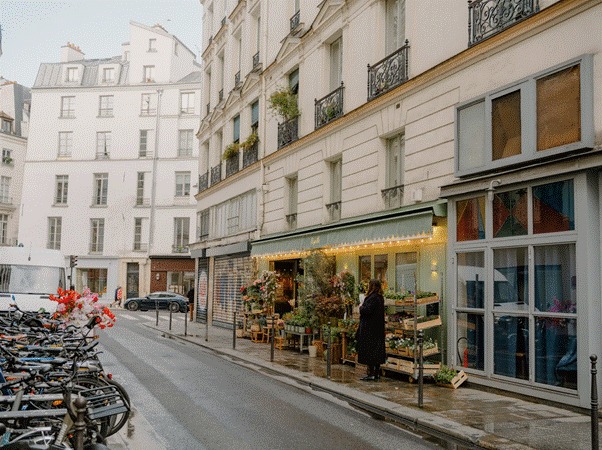
For two centuries the postcard version of Paris meant wrought-iron balconies, cream-colored limestone and mansard roofs cut at exactly the angle Baron Haussmann demanded in the 1860s. That image still sells the tourist maps, but it no longer describes where most Parisians actually live, work or unwind on a Tuesday night.
Since the 1960s a second city has grown alongside the first one, built from raw concrete, glass towers and modular housing blocks that architects once called ugly and residents now defend fiercely. The shift touches leisure too – a night out in 2026 is as likely to happen through a screen, on a platform like sankra casino, as behind a velvet curtain in the 9th arrondissement.
From Haussmann’s Grandeur to Béton Brut
Haussmann demolished roughly 12,000 buildings between 1853 and 1870, replacing medieval alleys with 30-meter-wide boulevards lined by near-identical six-story blocks. The uniformity was the point: fire escapes, sewers and sightlines all served Napoleon III’s plan to make revolt harder to organize.
By the 1950s Paris had run out of room for that formula. Housing shortages after the war pushed planners toward prefabricated concrete – cheaper, faster, and indifferent to matching cornice heights. Ivry-sur-Seine, Les Olympiades and the Front de Seine towers rose within a single generation, each one a deliberate break from the postcard. Architects trained in the Beaux-Arts tradition initially refused the commissions, so much of the early concrete work went to engineers instead, people used to solving load calculations rather than facades – stairwells that double as structural bracing, balconies that cantilever without visible support, window grids that follow ventilation math more than any aesthetic rule.
● Les Olympiades (13th arrondissement, completed 1977) added roughly 15,000 residents on a raised pedestrian deck
● Tour Montparnasse (1973) became the tallest building in France at 210 meters, and stayed controversial for decades
● Ivry-sur-Seine’s Jean-Baptiste-Clément estate turned staircases into sculpture, a style locals nicknamed “the Spielraum”
The Concrete Renaissance in Numbers
Brutalism spent thirty years as an insult in French planning meetings. That changed around 2015, when Paris City Hall began listing several 1970s estates as protected heritage rather than demolition candidates, citing their engineering rather than their looks.
The reversal shows up in the budget lines. Renovation spending on postwar concrete housing rose from roughly 40 million euros in 2016 to over 210 million euros by 2024, according to city planning reports, with insulation retrofits accounting for most of the jump.
| District | Signature structure | Built | 2024 status |
| 13th arrondissement | Les Olympiades | 1977 | Heritage-listed, renovated |
| 14th arrondissement | Tour Montparnasse | 1973 | Facade renewal underway |
| Ivry-sur-Seine | Jean-Baptiste-Clément estate | 1975 | Protected since 2015 |
| 19th arrondissement | Orgues de Flandre | 1980 | Partial demolition planned |
Rents tell the same story from a different angle. A one-bedroom in Les Olympiades still runs roughly 30 percent cheaper than a comparable Haussmannian flat two Metro stops away, according to 2025 listings, even after the recent renovation wave. That gap is shrinking as heritage status pushes maintenance budgets up, but for now it keeps the concrete districts genuinely mixed-income rather than gentrified into a single bracket.
How the New Paris Actually Works
Concrete Paris was never one building type. It ranges from 30-story towers to low, terraced blocks that step down toward the river, each responding to a different housing brief from the same decade. Walking from Haussmannian streets into Les Olympiades feels like crossing a border without leaving the arrondissement.
The everyday experience changed alongside the skyline. Cafés under the raised decks stay open later than their ground-level cousins, corner shops sell across three languages, and residents describe a rougher but more mixed social fabric than the postcard districts a kilometer away.
Housing Reinvented
Prefabricated panels cut construction time for a standard apartment block from roughly eighteen months to six, letting Paris house tens of thousands of returning workers and immigrant families through the 1970s housing crunch. The panels also standardized apartment sizes, which critics blamed for monotony but planners credited for speed.
Public Space Redrawn
Raised pedestrian decks separated cars from foot traffic decades before “car-free” became a planning slogan. Les Olympiades still routes delivery trucks underneath its plaza, a layout copied later in La Défense and, more loosely, in several UK new towns of the same period.
Fifty years on, neither Paris survived untouched. The limestone city absorbed rooftop solar panels and bike lanes; the concrete city absorbed heritage protection and community gardens. What began as two competing visions of a modern capital now reads as one continuous argument about how density, comfort and identity fit inside the same twenty arrondissements.